

Foundations, Dissent, & Distribution: Neurotech splits between the Lab, the Clinic, & the Consumer #3

TL;DR: In today's edition of Neuro Features, we're following one thread through neurotech — the lab that cracked the science, the founder who challenged the field's assumptions about implant safety, the operator who took a material nobody had tried in a human brain, and the device that never bothered with a clinic at all.
The lab. Back in 2012, a UC Berkeley team taught a rat to fire a single cortical neuron on command, well enough to work a robotic reward lever. That's the finding modern BCI training is built on — and the people who ran that lab now run BCI programs of their own.
The founder. He argued in 2018 that a functional implant didn’t need to penetrate the cortex; in April 2025, the FDA cleared exactly that implant.
The operator. In late 2024, a former Medtronic commercial operator — not a scientist — got a graphene interface into a human brain for the first time.
The device. Born out of ten years of ear-computing research, this wearable keeps winning CES awards for something a lot less glamorous than a brain implant: helping people sleep.
Four different starting points. What connects them isn’t a shared answer, but a shared willingness to sit with the same unresolved question a little longer than everyone else did.
🔬 Research & Academia
Jose M. Carmena
Chancellor’s Professor of Electrical Engineering & Neuroscience, UC Berkeley
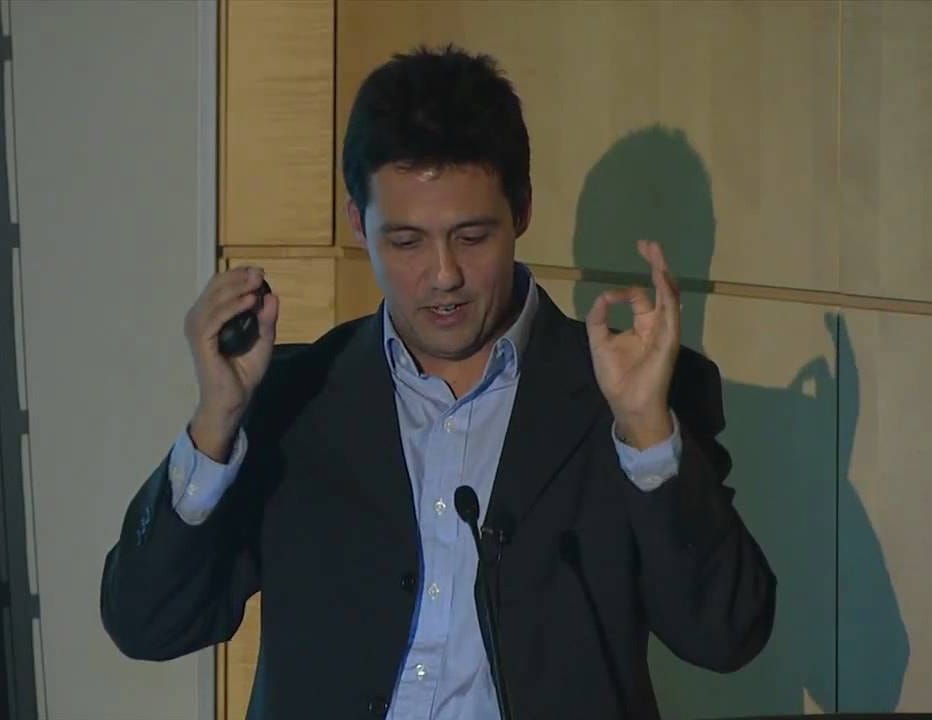
The question underneath every closed-loop BCI now in clinical trials: does the brain treat a prosthetic like a foreign tool it must be told how to operate, or like a limb it can learn to inhabit the way it learns any new motor skill? Carmena’s lab spent two decades building the evidence for the latter — and along the way trained a generation of researchers who now run BCI programs of their own.
FIELDS OF WORK & EXPERTISE:
Brain-machine interfaces · Neuroprosthetics · Sensorimotor learning and control · Neural ensemble computation · Corticostriatal plasticity · Closed-loop decoder adaptation
EARLY CAREER & RECOGNITION:
B.E in Electrical Engineering
M.S in Electrical Engineering, University of Valencia, Spain
M.S in Artificial Intelligence and PhD in Robotics, University of Edinburgh (Scotland)
Postdoctoral Fellow, Department of Neurobiology and Center for Neuroengineering, Duke University
Professor of Electrical Engineering and Neuroscience, UC Berkeley
IEEE Fellow
McKnight Technological Innovations in Neuroscience Award (2017), Alfred P. Sloan Research Fellowship (2009), Bakar Fellowship (2012), the IEEE Engineering in Medicine and Biology Society Early Career Achievement Award (2011), the Aspen Brain Forum Prize in Neurotechnology (2010), the National Science Foundation CAREER Award (2010)
NOTABLE IMPACT FOR THE NEUROTECH WORLD:
His 2012 Nature paper (Koralek, Jin, Long, Costa, and Carmena) demonstrated that corticostriatal plasticity is necessary for learning intentional neuroprosthetic skills — meaning a subject doesn’t simply execute a decoder’s fixed mapping, it learns to control that mapping the way it would learn any new motor skill. That single finding reframed how the field designs training protocols for brain-machine interfaces, and it remains a live design question in every BCI clinical trial running today.
His lab’s later closed-loop decoder adaptation work, published in Neuron in 2014, showed that a decoder which adapts alongside the brain — rather than staying fixed — actively shapes neural plasticity itself. That result is a direct precursor to the adaptive recalibration methods now used to address the neural-drift problem in long-term BCI deployment.
Postdocs trained in his lab, including Karunesh Ganguly, carried this research program into their own labs — giving Carmena’s work an unusually direct line of descent into some of the most cited BCI research being published now.
WHAT HE’S TALKING ABOUT RIGHT NOW:
Why neuroprosthetic control is a learned motor skill, not a fixed decoder mapping
How closed-loop decoder adaptation should be designed to work with the brain’s own plasticity, not against it
What two decades of corticostriatal plasticity research means for training protocols in commercial BCI systems
The gap between academic BMI research and the training-protocol decisions being made inside clinical-stage BCI companies today
WHY THIS MATTERS?
Every clinical BCI company promising fast, reliable decoder calibration is operating downstream of questions Carmena’s lab spent two decades answering carefully. As commercial timelines compress the distance between “works in one patient” and “works reliably for thousands,” the basic-science question of how a brain actually learns to use a machine hasn’t gone away — it’s simply been inherited by people with far less time to get it right.
🔗 Dive deeper into his research and stay up to date with his work: Linkedin | UC Berkeley
🏢 Business & Industry
1. Carolina Aguilar
CEO & Co-Founder, INBRAIN Neuroelectronics

For thirteen years, the person deciding which neuromodulation products actually reached patients at Medtronic wasn’t a scientist. When she left to build her own neurotech company, she brought that same commercial instinct to a material that had, until recently, never left physics labs.
FIELDS OF WORK & EXPERTISE:
Graphene-based neural interfaces · BCI therapeutics (BCI-Tx) · Commercial scaling of neuromodulation · Regulatory strategy · Precision neurology
EARLY CAREER & RECOGNITION:
Studied Pharmacy in Universidad Complutense de Madrid
Masters in Neuroscience & Neurotoxicology, in Virginia Tech, US
13 years at Medtronic, including a decade leading the company’s global neuromodulation business (deep brain stimulation and diabetes), with a P&L of roughly $140M
Co-founded INBRAIN Neuroelectronics in Barcelona alongside nanoscience researchers José A. Garrido, Kostas Kostarelos, and Antón Guimerà, spun out of the Catalan Institute of Nanoscience and Nanotechnology (ICN2)
World Economic Forum Technology Pioneer
Named Best Chief Executive Officer by the European Investment Bank at the EIBG Summit for Women Leaders in Life Sciences (November 2025)
NOTABLE IMPACT FOR THE NEUROTECH WORLD:
INBRAIN completed the world’s first human application of a graphene-based BCI in September 2024 — implanted during a brain tumor resection at Salford Royal Hospital, Manchester, in a study backed by the University of Manchester and the EU’s Graphene Flagship. The graphene array, just 10–12 micrometers thick, distinguished healthy from cancerous tissue with a precision metal electrodes can’t structurally match.
The company also holds FDA Breakthrough Device Designation for its BCI-Tx platform in Parkinson’s, with Mayo Clinic and Microsoft as collaborators. Aguilar’s recurring argument: electrode count is the wrong metric — what matters is what fewer, better-placed contacts can do without spreading current into tissue that shouldn’t be touched.
She's also the unusual variable. INBRAIN's founders came out of nanoscience; Aguilar is a commercial operator, not a scientist — brought in to translate a new material into a regulated clinical product, which is exactly the kind of role this field has been short on.
WHAT SHE’S TALKING ABOUT RIGHT NOW:
Why “implantable vs. non-implantable” is a more useful framing for BCI than “invasive vs. non-invasive”
Moving graphene BCI from a single intraoperative use to chronic, long-term implantation
Why electrode count is the wrong axis of competition in BCI — micrometric precision and clinical relevance matter more
Building BCI-Tx as a multi-indication platform across Parkinson’s, epilepsy, and stroke
Why regulation needs to keep pace with graphene BCI innovation rather than lag behind it
WHY THIS MATTERS?
As more neurotech companies raise money on the strength of a novel material or a single first-in-human milestone, INBRAIN is a live test case for what comes next: whether a genuinely new material like graphene can move from one intraoperative procedure to a chronic, reimbursable therapy — and whether a commercial operator, rather than a scientist, is the right person to run that translation.
🔗 Dive deeper into her work and stay up to date with INBRAIN: LinkedIn | X | inbrain-neuroelectronics.com
2. Benjamin Rapoport
Co-Founder & Chief Science Officer, Precision Neuroscience
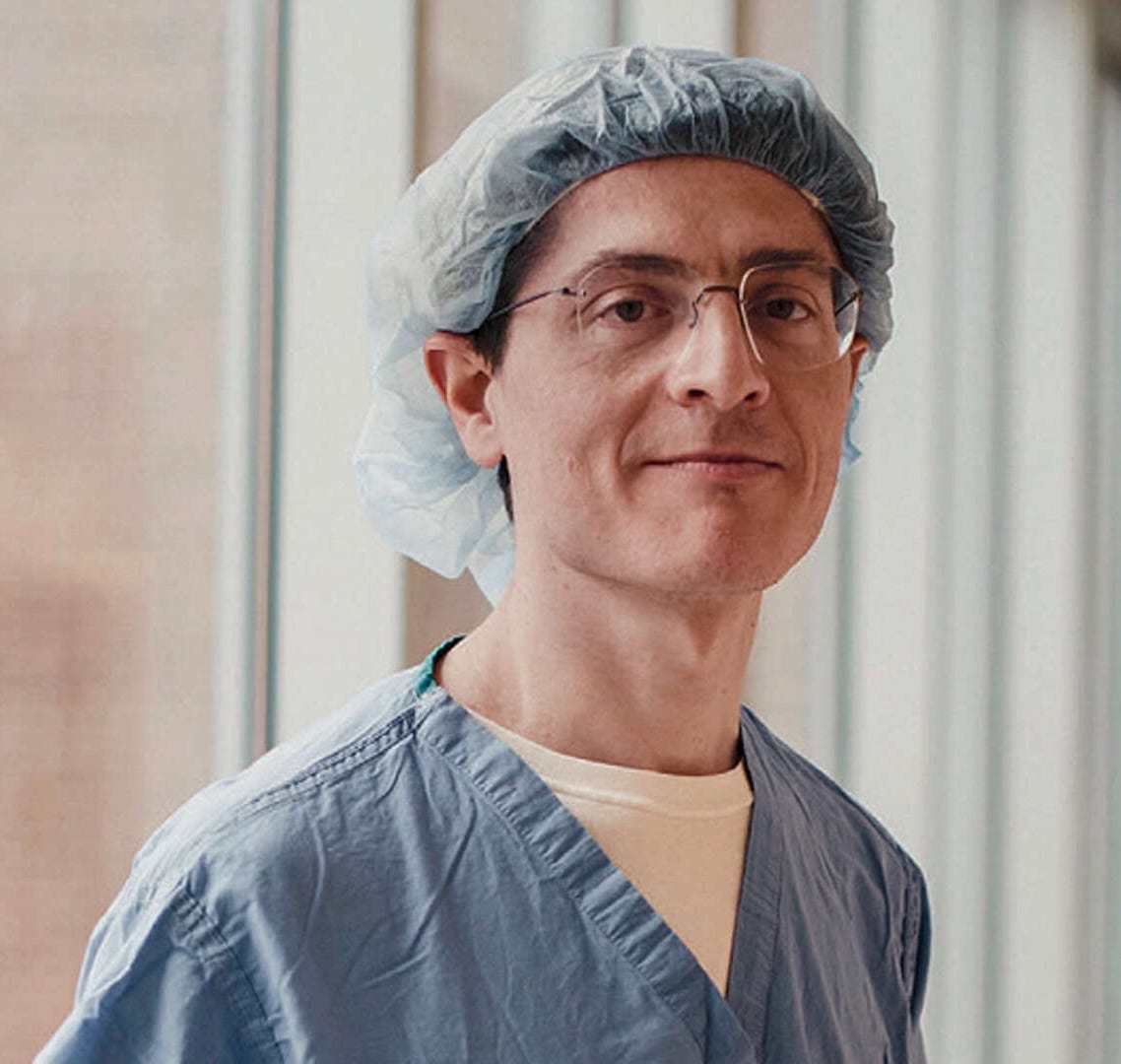
Rapoport was one of Neuralink’s eight founding engineers in 2016. Two years later he left to pursue a different answer to a question the company was still working out: whether penetrating the cortex is a necessary cost of a working brain-computer interface, or one that better engineering could avoid.
FIELDS OF WORK & EXPERTISE:
Non-penetrating cortical interfaces · Minimally invasive neurosurgery · Neural decoding at scale · BCI regulatory strategy · Thin-film microelectrode array design
EARLY CAREER & RECOGNITION:
MD, Harvard Medical School
Residency, Neurological Surgery, New York Presbyterian Hospital-Weill Cornell
Founding team member, Neuralink (2016–2018)
Co-Founder & Chief Science Officer, Precision Neuroscience, founded 2021 alongside CEO Michael Mager
Faculty, Mount Sinai
NOTABLE IMPACT FOR THE NEUROTECH WORLD:
Precision’s Layer 7 Cortical Interface is a thin-film array of 1,024 microelectrodes — thinner than a human hair — placed on the brain’s surface through a sub-millimeter slit rather than a craniotomy. It doesn’t penetrate tissue, which was Rapoport’s founding argument.
In April 2025, the FDA cleared it for temporary implantation of up to 30 days — the first clearance granted to a next-generation wireless BCI. By then it had already been tested in 37 patients across three hospital systems, mostly during neurosurgical procedures.
The bigger story is the natural experiment underneath it: two founders left the same company with the same starting point and bet on opposite paths — one penetrating and permanent, one non-penetrating and temporary. Both are now in active clinical use, which means the market, not the science, is about to settle the argument.
WHAT HE’S TALKING ABOUT RIGHT NOW:
Why neural decoding algorithms need the same volume of data other AI systems depend on — and why non-penetrating access is the safer way to get it at scale
The tradeoff between electrode density and tissue safety in cortical interfaces
Moving Layer 7 from a temporary, intraoperative tool toward a long-term implant
What his founding disagreement inside Neuralink revealed about where BCI safety standards should actually sit
WHY THIS MATTERS?
Precision is the clearest live test of whether “less invasive” is a genuine commercial and regulatory advantage or just a slower path to the same destination. With FDA clearance now in hand, Rapoport’s original 2018 approach has something it didn’t have then: evidence.
🔗 Dive deeper into his work and stay up to date with Precision Neuroscience: Mount Sinai profile | precisionneuro.io | Linkedin
3. Tam Vu
Founder & Chairman, Earable Neuroscience

Most of the neurotech in this issue is built for a patient in a clinical trial. Vu’s is built for anyone having a bad night’s sleep — proof that the same underlying neuroscience can be aimed at a hospital or at a nightstand, depending on who’s asking and what they’re willing to wait for.
FIELDS OF WORK & EXPERTISE:
Consumer neurotech · Earable computing · Bone-conduction neurostimulation · EEG-based sleep and focus tracking · Wearable AI systems
EARLY CAREER & RECOGNITION:
Pioneered the field of “Earable Computing” in 2015 — ear-based sensing and stimulation platforms
Former Associate Professor, University of Colorado and Oxford University
Thomas A. and Georgina Tugwell Russo 1977 Distinguished Professor of Computer Science, Dartmouth College
Founded Earable Neuroscience in Boulder, Colorado (2018); served as CEO from 2018–2025, now Founder & Chairman
Raised over $10M from Founders Fund, Smilegate Investment, 500 Global, and Samsung Ventures
NOTABLE IMPACT FOR THE NEUROTECH WORLD:
Earable’s FRENZ Brainband tracks and stimulates brain activity through bone-conduction speakers built into a headband, aimed initially at a single, unglamorous problem: helping people fall asleep faster. A clinical study published in Nature Scientific Reports found FRENZ reduced average sleep onset time by 24 minutes.
FRENZ has won CES Innovation Awards three years running — 2023 (Wearable Tech), 2024 (Accessibility & Aging Tech), and 2025 (Digital Health) — along with a Red Dot Design Award. That recognition sits in a different lane from the FDA milestones the rest of this issue chases, because Earable isn’t seeking regulatory clearance for a therapy — it’s competing for consumer attention and retail shelf space.
That distinction is the point. Most capital and press attention in neurotech goes to companies working through the FDA. Vu’s company is a working example of the other route to scale: skip the clinic, sell direct to consumers, and let real-world usage — Earable cites 10,000+ users across 40+ countries — build the evidence base instead of a pivotal trial.
WHAT HE’S TALKING ABOUT RIGHT NOW:
Why consumer neurotech doesn’t need FDA clearance to reach meaningful scale
Turning ear-based sensing from an academic research platform into a manufacturable consumer product
Extending FRENZ from sleep into focus and cognitive performance, via its EEG-based Focus feature launched at CES 2025
What a decade of academic earable-computing research looks like once it has to survive contact with mass manufacturing
WHY THIS MATTERS?
Every BCI company in this issue is negotiating with a regulator. Vu’s company is negotiating with a consumer market instead — and three consecutive CES wins are evidence that a meaningful slice of neurotech’s future doesn’t have to run through a hospital at all.
🔗 Dive deeper into his work and stay up to date with Earable Neuroscience: frenz.earable | Linkedin | X
Look closely and the pattern isn’t ambition — it’s friction. Carmena stayed with a question the rest of the field considered settled. Aguilar pushed a lab material somewhere it wasn’t supposed to go. Rapoport built a device that argued with his own company’s roadmap. Vu removed the hospital from the equation entirely.
Four different fields. Four different fights. None of them bet on a trend. They bet against a default. And each of those bets is now shipping.
🌟 Neurotech Pulse Spotlight: Faces Worth Knowing!
Behind every breakthrough, every funding round, and every bold idea in this space — there’s a person worth knowing. This is our curated spotlight on the individuals shaping neurotechnology, spanning founders and investors to neuroscientists and industry builders. Our selections are guided entirely by the significance of their work and their impact on the field. We hope you find it as rewarding to read as we do to put together.
Thanks for reading Neurotech Pulse! Subscribe for free to receive new posts.